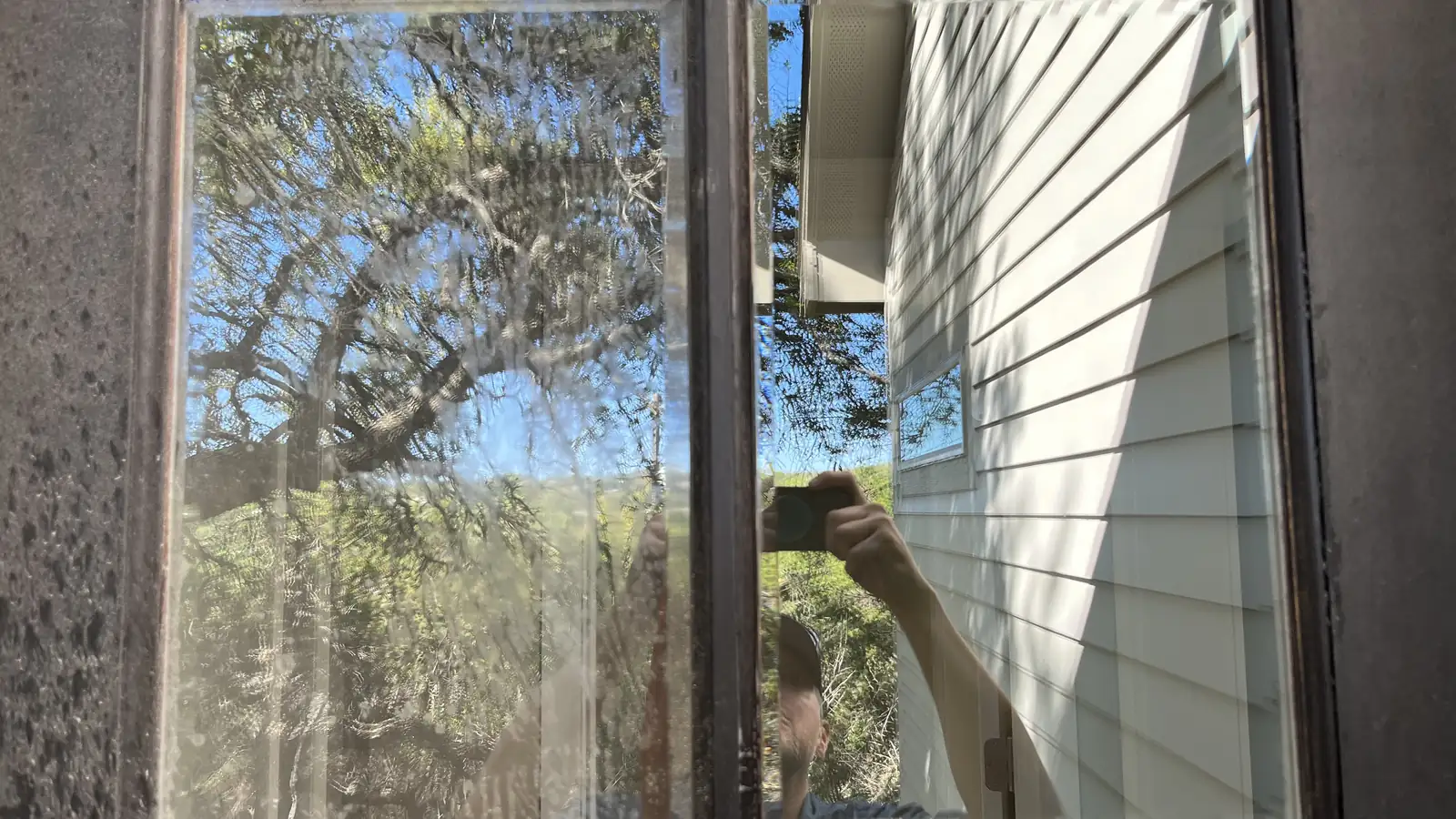
Almost every window cleaning call in Central Texas that starts with "we have tried everything" turns out to be the same problem. It is not dirt, and it is not a streak. It is mineral deposit left behind by hard water, and once it reaches a certain stage no amount of ordinary washing will move it.
What hard water actually is around Austin
Central Texas sits on limestone. Water moving through limestone picks up dissolved calcium and magnesium, and that is what "hard" water means. It is perfectly safe to drink. The problem is what happens when it lands on glass and then dries.
Water evaporates. The minerals it was carrying do not. Every time a sprinkler throws water across a window and the sun dries it, a thin deposit of calcium is left behind on the surface. One cycle is invisible. A summer of daily irrigation is not.
Why it is worse at some addresses than others
Two houses on the same street can have very different severity, and the reason is usually the water source rather than the homeowner.
- City supply is treated and typically carries a moderate mineral load.
- Private water districts, such as WCID 17 out toward Bee Cave, often run noticeably harder.
- Well water is usually the heaviest of all, and it is untreated. Homes off the main lines that irrigate from a well tend to show the fastest buildup.
This is also why washing windows with untreated well water straight from an outdoor spigot is counterproductive. The glass gets clean, then the rinse water dries and deposits a fresh layer of minerals across it. The work is undone before anyone has packed up.
The three stages, and where reversal stops being possible
Hard water damage is progressive, and knowing which stage a window is at determines what can be done about it.
Stage one: fresh spotting
Deposits are sitting on the surface and have not bonded. This washes off with normal cleaning. Most people never think about it because it never becomes visible.
Stage two: bonded deposits
Repeated wet and dry cycles build the mineral into a hardened layer that is chemically bonded to the glass. This is the cloudy white film most people are looking at when they call. Soap and a squeegee will not touch it, and neither will any supermarket glass cleaner, because the problem is not on top of the glass in the way dirt is.
Stage three: etching
Left long enough, the minerals begin to eat into the silica surface itself. At that point the glass is physically pitted rather than coated. Etching is permanent damage, not dirt, and no cleaning process reverses it. Severe cases mean replacement.
The practical takeaway is that stage two is the window of opportunity, and it can last years. Most glass that looks ruined is still stage two and still recoverable.
What actually removes bonded deposits
Restoration is a two-part process, and both parts matter.
First, a specialized acidic remediation agent is applied to break the chemical bond between the mineral and the glass. This is not a household product and it is not a stronger version of window cleaner. It is formulated to dissolve calcium without attacking the surrounding surfaces.
Second, the softened deposit is lifted mechanically using super-fine 0000 grade steel wool. That sounds alarming to most homeowners, and the concern is reasonable, so it is worth explaining why it is safe. Glass is harder than steel. Fine steel wool at the correct grade will lift mineral deposit without abrading the pane beneath it. The grade is the critical detail: coarser grades, scouring pads and abrasive powders will absolutely leave marks.
One genuine caution applies to tempered glass. Some tempered panes carry fabricating debris from manufacture, small particles fused to the surface during tempering, and aggressive work on those can drag a particle across the pane and scratch it. A small test area is always worth doing before committing to a full elevation.
When the frame decides the method
Not every window can take the standard approach, and the frame is usually what decides it. On a wood framed door, acidic remediation agents and abrasives cannot go near the timber. Both will mark the finish, and neither is fully controllable running down a vertical pane. That rules out the fast method outright.
What is left is slow hand work, pane by pane, keeping everything clear of the wood. On the door at the top of this page that came to roughly ten minutes per pane. That is a long time to spend on one piece of glass, and it is why a job like that gets quoted differently from a standard clean rather than by window count alone.
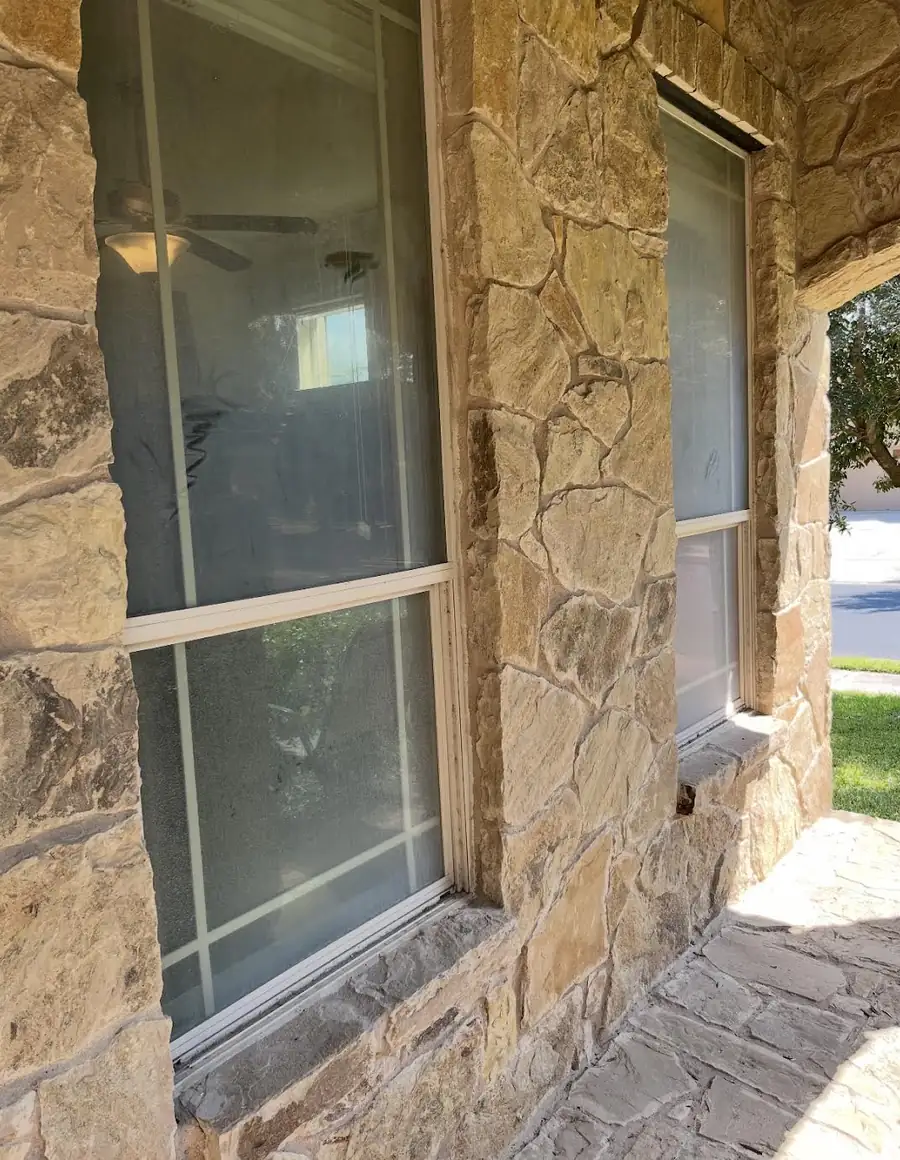
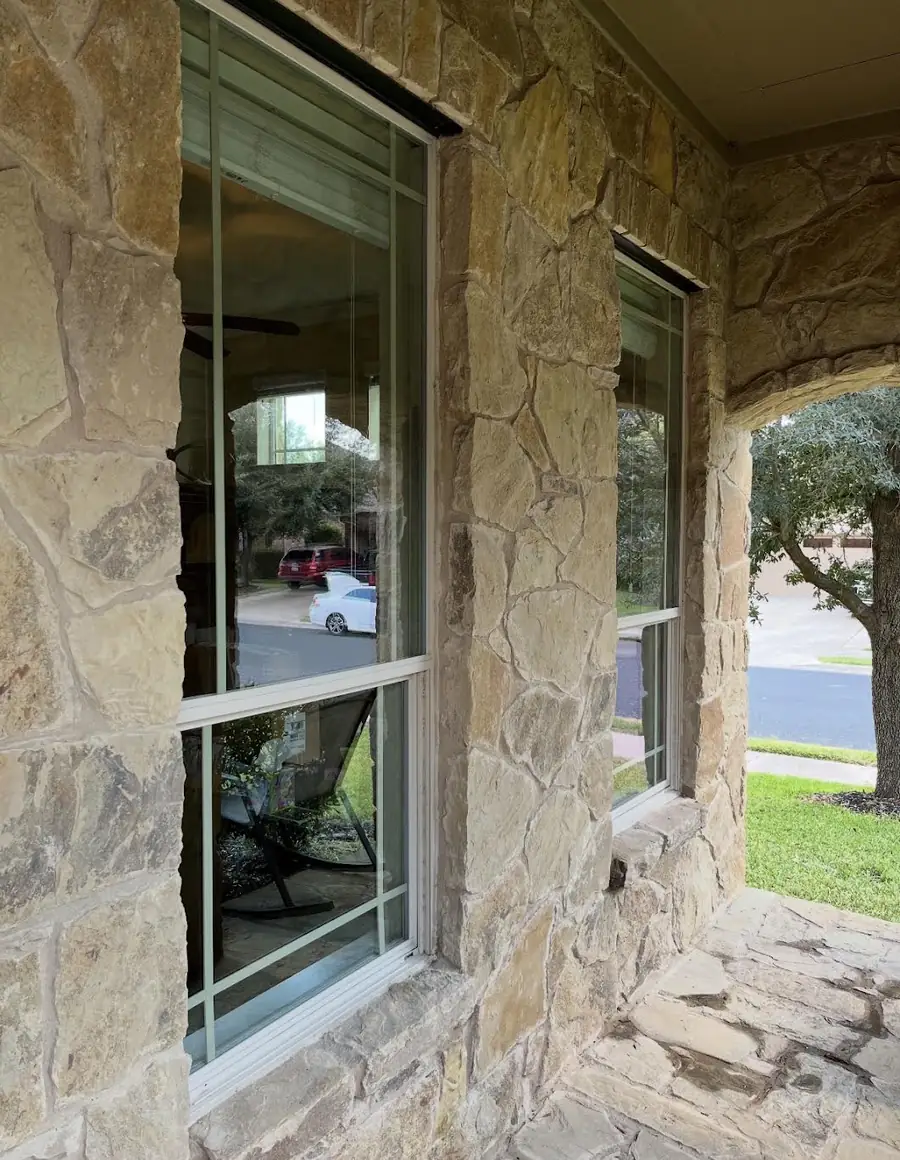
The same two windows, same angle. On the left, years of mineral deposit had built up to the point the glass read as frosted and the room behind it was barely visible. This is stage two: bonded, not etched, and no amount of ordinary washing would have shifted it. On the right, after mineral remediation, the street, the parked cars and the interior are all legible again.
Where it shows up first
Damage is rarely spread evenly, because it follows the water.
- Lower panes on any elevation the sprinklers reach. This is the most common by a wide margin.
- Patio and pocket sliding doors, particularly near misting systems or a pool, where splash and overspray hit the same glass repeatedly.
- Shower doors, which face the same chemistry indoors and are frequently written off as permanently cloudy when they are not.
Preventing the next round
Restoration is worth doing, but keeping glass out of stage two is cheaper than getting it back.
- Adjust the sprinkler heads. This is the single highest-value fix and it costs nothing. Most hard water damage traces back to one or two heads aimed slightly wrong.
- Do not rinse windows with untreated well or spigot water. Purified deionized water dries without leaving minerals behind, which is why professional work uses it for the final rinse.
- Consider a hydrophobic glass shield on the worst-affected glass, typically patio doors. It makes it much harder for new deposits to bond, and it buys time between treatments.
- Deal with it early. Stage two responds well. Stage three does not respond at all.
The short version
If windows have gone cloudy and washing is not fixing it, the cause is almost certainly bonded mineral rather than dirt, and it is probably still reversible. The thing that decides the outcome is how long it has been left, because the one stage nobody can undo is the last one.