FULL DEBRIS CLEAR-OUT
Every gutter run cleared of leaves, shingle grit, nests and buildup by hand, then bagged and hauled away so your property is left spotless.
- →Hand-cleared, not just blown
- →Debris bagged & removed
- →Single & multi-story homes

Protect your home from the top down. A complete debris clear-out plus a downspout flush and flow test, so water actually goes where it should. Clogged gutters put your roof, fascia, siding and foundation at risk, especially ahead of Central Texas storm season. We clear them by hand and bag the debris, leaving no mess behind.
A gutter full of leaves and shingle grit doesn't just overflow. It sends water down your walls, rots your fascia, and pools against the foundation. In Central Texas, one hard storm on clogged gutters can cause thousands in damage.
We clear every run by hand, flush the downspouts until they run clear, and confirm proper flow, then bag and haul off the debris. You get a clean, working gutter system and photos of anything that needs your attention.
A thorough, no-mess clear-out that keeps water moving away from your home, one-time or on a recurring schedule.
Every gutter run cleared of leaves, shingle grit, nests and buildup by hand, then bagged and hauled away so your property is left spotless.


Clear gutters mean nothing if the downspouts are blocked. We flush each one and confirm water flows freely and drains away from your foundation.
While we're up there, we flag sagging gutters, loose fasteners, and any fascia or soffit issues before they become expensive repairs.
Optional soft-wash brightening removes the black streaks on the front of your gutters for a crisp, finished look.
Central Texas storms overwhelm clogged gutters fast. A clear-out before the wet season protects your roof and foundation when it matters most.
Heavy tree cover? Set up biannual or quarterly service so your gutters never get the chance to clog in the first place.
Purified water cleaning for solar arrays. Dust, pollen and hard water film all cut into how much power a panel actually produces, and the same deionized water system used on high glass rinses them clean without leaving mineral residue behind.
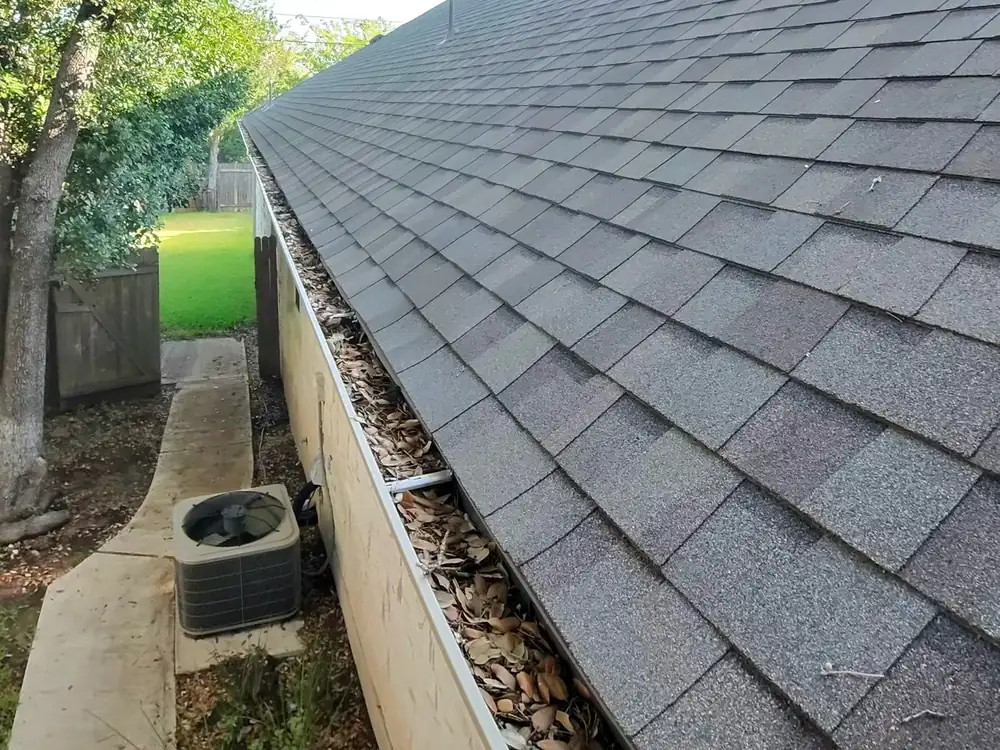
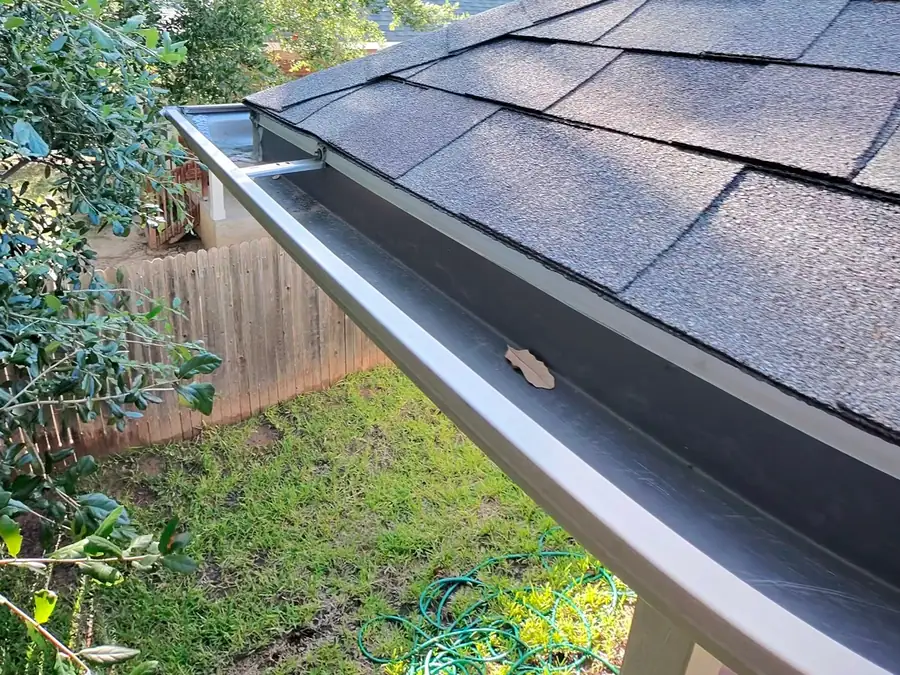
Two runs on the same house, same visit. Oak and pecan drop constantly around here, and what settles in the channel is not loose leaves that blow away. It packs down into a wet mat that holds water against the fascia.
Debris gets cleared by hand rather than flushed along the run, because flushing just moves the blockage into the downspout where you cannot see it. Everything is bagged and taken away, then every downspout is flushed and flow tested so you know the whole system actually drains.
No. And I would rather tell you that plainly than sell around it.
Guards stop leaves. They do not stop the fine material, and the fine material is what actually blocks a gutter. Silt, sand and roof grit wash straight through the mesh and settle in the channel underneath, where nothing can reach them. You cannot clear that out without taking the guards off, which is the one thing the system is designed to discourage.
What follows is predictable. The company that installed the gutters sells you the guards. Then it sells you maintenance, which turns out to mean blowing the leaves off the top of the guards rather than opening anything up. Underneath, year after year, the silt turns to mud and then to mould, mildew and insects, and eventually it is heavy enough to pull on the gutter itself. Then the same company sells you the repair, or the replacement.
Install the gutters, install the guards, sell the maintenance that is not really maintenance, then sell the repair caused by the failure. That is four sales out of one roofline.
If you already have guards, this is not a reason to panic. It is a reason to have them taken off and the channel properly cleared, so you find out what is under there before the weight does the telling.

Not the calendar. Your trees.
Heavy leaf fall. If you have mature oak or pecan sitting over the roofline, once is not enough and you will spend the second half of the year with a full gutter.
Everywhere else, with a flush in the autumn once the drop has finished. Going earlier just means doing it again.
What really sets the number is the type of tree you have and when its leaves come down, which is why two houses on the same street can need completely different schedules. If yours genuinely only needs doing once, we will say so.
A gutter that has been full for long enough stops being a gutter. The weight pulls it away from the fascia, and once it is hanging off the edge it has lost the original slope. Water no longer runs the way the roof was built to send it, and the channel starts holding dirt and mud instead of moving it.
At that point clearing it out does not fix anything, because the fall is wrong. That is a repair, not a clean, and it needs someone who resets the hangers and the pitch properly. We will tell you when you are at that stage rather than take the money for a job that will not hold.
The reason to catch it early is not the gutter. It is the wood behind it. Fascia boards rot from water sitting against them, and replacing fascia costs many times what clearing a gutter does.
We clear gutters on commercial buildings, and the honest position is that most of them give far less trouble than houses do. Commercial gutters tend to be specified large enough that they never really back up. That is not luck, it is correct engineering.
The problems turn up on undersized runs. A two by three downspout on a building that should have a three by four, or a four by six, will block no matter how carefully anyone maintains it. There is simply not enough tube to move what the roof is sending down. A properly sized system, maintained, should not be getting stopped up at all.
So if one building in a portfolio keeps blocking and the others do not, the answer is usually in the sizing rather than the schedule. Worth knowing before paying for more frequent visits that will not solve it.
An HOA brought us in across fifty two homes. Every one had gutter guards fitted and not one had been properly cleared in fifteen years. The roofs were failing by then, so asphalt grit off the shingles had washed down on top of everything else.
The gutters were full of rock and mud. The downspouts were buried solid, and the corrugated pipe underground had deteriorated, so there was nowhere for any of it to go. The whole system had set like cement, right the way up and around the houses. By the time we opened it up the water had already been into the woodwork.
Every one of those roofs had guards on it. That is the argument against them, sitting in one place, fifty two times over.
Based in Leander and serving the I-35 and Hill Country corridor. Tap your city for local details, or call to confirm availability.
GET A FREE QUOTE"Mason did an awesome job on our windows! His attention to detail is unmatched, and you can tell he loves what he does. He took his time to make sure everything was perfect and left all our windows sparkling. Highly recommend!"
"Mason is not just a window cleaner. He is a business owner and truly passionate about what he does. He went above and beyond what I imagined. Prompt, communicative, professional, and reasonably priced. I will not use anyone else. 10 stars."
"Windows never looked so great until Mason The Window Cleaner came out to our office. I've been at this location for 12 years, had many window cleaners come around. What a HUGE noticeable difference, wow! You are a super Mason!"
Send a few details and Mason will reply with a no-obligation estimate, typically the same business day. Prefer to talk? Call or text (737) 314-1413.
Your request is in. Mason will reach out shortly, usually the same business day. Need it sooner? Call or text (737) 314-1413.
Something went wrong sending your request. Please call or text (737) 314-1413 and we'll take care of you.
Most Central Texas homes need gutter cleaning once or twice a year, typically late fall and spring. Homes with heavy oak or pecan cover often need quarterly service, since shingle grit and leaves build up much faster.
A full hand clear-out of every gutter run, a flush and flow test of all downspouts, bagging and removal of debris, and a quick check for sagging sections or fascia issues. We leave your property clean and let you know if anything needs attention.
Yes, always. A downspout blockage is the most common cause of overflow, so we flush each one and confirm water runs freely and drains away from the foundation. Clearing gutters without checking downspouts only solves half the problem.
Absolutely. When gutters overflow, water pools against the foundation and soaks the soil, which, in Central Texas's expansive clay soils, drives the movement that cracks slabs and walls. Keeping gutters clear is one of the simplest ways to protect your foundation.
Yes. Many homeowners with heavy tree cover set up biannual or quarterly programs with priority scheduling and preferred rates, so their gutters stay ahead of the debris year-round.
We would say no. Guards stop leaves but not the fine silt, sand and roof grit that actually blocks a gutter, and that material settles in the channel underneath where it cannot be reached without removing the guards. Over the years it turns to mud, mould and insects, and eventually gets heavy enough to pull on the gutter itself.
Yes. Most commercial gutters give less trouble than houses because they are specified large enough not to back up. Where we do see problems is undersized runs, a two by three downspout where the building needs a three by four or a four by six. If one building in a portfolio keeps blocking and the others do not, the sizing is usually the reason rather than the schedule.
We can clear it, but clearing it will not fix it. Once a full gutter has pulled away from the fascia it has lost its original slope, so the water no longer runs the way the roof intended and the channel holds dirt instead of moving it. That is a repair rather than a clean, and we will tell you when you are at that stage rather than take payment for something that will not hold.
Complimentary Estimates · Same-Day Response · Licensed & Insured